


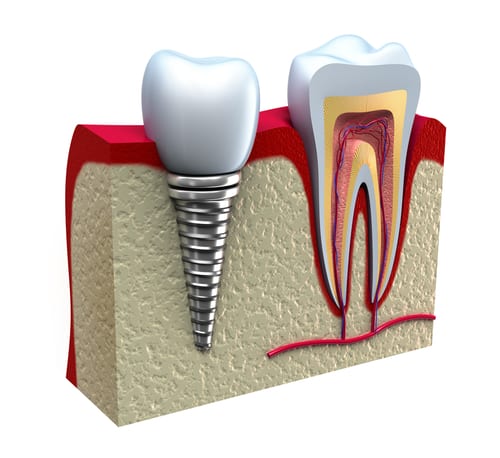
 If you’ve lost a tooth (or multiple teeth) to disease, injury, or other problems, you may be considering different restoration methods. In recent years, dental implants have become increasingly popular. These “new teeth” closely resemble your natural teeth structurally, cosmetically, and functionally. Just as a natural tooth has a root and a crown – an implant does, too, although its root resembles a titanium screw. The titanium material is able to fuse directly with your jaw bone once the implant is placed. This process usually takes three to six months, but afterwards – you’ll have a fully-functioning smile again! (more…)
Can Sugar-Free Drinks Damage Your Teeth?
 You probably understand the link between sugar and tooth decay, but did you know that sugar-free drinks can be just as damaging to your teeth? Acid is formed when sugar comes in contact with plaque or tartar on our teeth, eventually leading to tooth decay. However, the lack of sugar in these drinks does not typically affect their pH level – which measures the acidity of the drink. The acidity of sugar-free drinks can still damage your tooth enamel and erode its inner layers. How do you know when a food or drink product is safe for your teeth? (more…)
What Are The Benefits Of A Dental Crown?
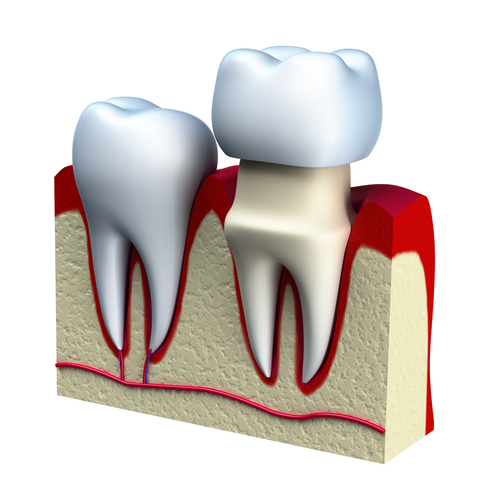 You may need a dental crown for a variety of reasons – to protect a broken tooth, to protect teeth weakened from large or deteriorated old fillings, to cover a dental implant, to support a dental bridge or for cosmetic reasons. In the past, dental crowns have been made out of materials like gold or silver. Now, they are made out of more natural-looking material such as porcelain, or in some cases, zirconia. Typically, when you smile you’re able to see the damaged tooth. Using these tooth-colored materials makes for a seamless smile! (more…)
How Does Preventive Dentistry Work?
 If your teeth aren’t properly taken care of, they can become decayed and susceptible to infection – potentially leading to tooth loss. However, practicing proper oral hygiene and visiting your dentist to ensure your teeth are strong and healthy can prevent infections such as periodontitis. Your dentist may periodically recommend x-rays and oral cancer screenings – rest assured this is to maximize your oral health. Typically, if you have an issue like infection or oral cancer, the earlier your dentist is able to identify it, the earlier you’re able to treat it. (more…)
Are You Dreaming Of A White Smile?
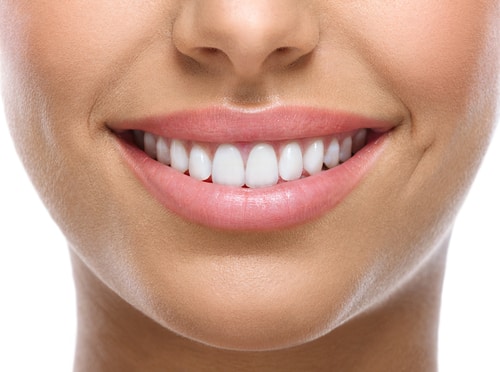 Professional teeth whitening sure has its perks, and could be a great holiday gift! Are you dreaming of a white smile? Although an in-office treatment is the most efficient when it comes to whitening, it may not be for everyone so you do have other options. A kit that can be purchased at your local grocery store or pharmacy, for example, can be more cost effective. So, if you’re looking for something you can do at home, don’t rule out your dentist just yet! They may have an option where you can take home whitening trays that have numerous benefits. You have so many options – what will it be this holiday season? (more…)
Should You Change Your Diet To Help Your Teeth?
 With Thanksgiving so closely behind us and more holidays just on the horizon, we want to take time to educate our patients about preventive dentistry and how your diet can affect the health of your teeth. The meal you ate in observance of the holiday last week was chewed with your teeth – did you eat more stuffing and cheesecake than you did green beans and turkey? Should you change your diet to help your teeth? We know how delicious it is, but if this is a regular meal for you, you could be harming your teeth with the food you’re consuming. (more…)
What Happens After You Lose Teeth?
 Unfortunately, we can lose teeth to gum disease, decay, or facial injury. Lost teeth directly affects how you speak, chew, and how confident you are. In addition to the benefits of restoring your tooth (or teeth), you can also prevent your face from changing shape and your teeth from shifting to fill the current gaps in your mouth. If your teeth shift, your bite will most likely be affected and become misaligned – which could potentially lead to a whole other set of problems. Are you wondering what happens after you lose teeth? Well, the answer is up to you – what are you going to do? (more…)
What Is An Oral Cancer Screening?
 Oral cancer screenings are performed at every routine cleaning throughout the year to ensure that you are healthy. Throughout an oral cancer screening, your dentist will check your tongue, cheeks, lips, gums, and floor of your mouth for signs of cancer. This is another reason why dentists recommend annual or biannual visits because the earlier on you can catch oral cancer, the easier it is to treat. Preventive dentistry helps to maintain healthy teeth and gums for an overall healthy mouth! (more…)
What Is Tooth Bonding?
 Tooth bonding is a procedure that is done to restore your smile. A resin material (that appears the same color as a tooth) is placed over your tooth and then hardened and bound to the tooth by a special light resulting in a beautiful smile! Tooth bonding can fix a multitude of cosmetic issues and can even restore decayed teeth. Prior to having your teeth bonded, you may want to whiten them because the resin material is matched to your tooth color and it does not change once it’s made. (more…)
How Often Do You Brush Your Teeth When You’re Sick?
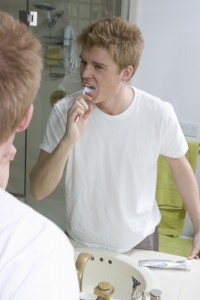 This time of year is notorious for illnesses from the common cold to the influenza virus. In fact, the Centers for Disease Control (CDC) and Prevention officially refer to this time of year as “the flu season,” and this year it started even earlier than usual. When you’re afflicted with influenza-like symptoms, such as fever, bodyaches, coughing, and many more, rising out of bed can seem like an Olympian’s challenge. Accomplishing routine daily tasks once you’ve risen out of bed, including brushing and flossing your teeth, can often prove impossible. However, if you are still able to rise to use the restroom, you still have opportunities to care for your dental health. Syosset dentist, Dr. Richard Kobak, explains why you should take advantage of those opportunities every time they arise to help protect your dental health while you’re sick.
While You’re Away…
Even when you’re healthy, bacteria grow and collect inside your mouth to form the sticky biofilm known as plaque. Many of these oral bacteria are the source of destructive oral health issues, including tooth decay and gum disease. Brushing and flossing your teeth helps control plaque buildup and inhibit bacterial gathering, reducing your risk of developing oral health issues. When you’re sick with the cold, flu, or any other systemic illness, bacteria thrive under your distracted immune system, increasing bacteria’s potency and ability to proliferate. You may not feel like brushing your teeth when you’re sick, but if you neglect to, then bacteria and plaque will increase faster than normal, and your oral health will face a greater risk than normal, and in much less time. (more…)