



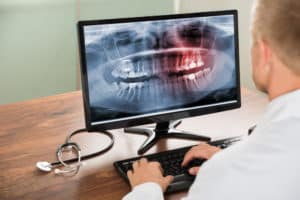
 Your dentist’s goal isn’t just to make your smile the best it can be; it’s also to protect your oral and overall health in the long run. To that end, digital radiography has become an important advantage in dental healthcare, allowing doctors to provide safe, fast, and highly accurate images for more precise diagnoses. Compared to traditional radiography, digital X-rays provide a wealth of advantages, three of which we explore further below.
1. They’re Safer
Traditional X-rays have been in use for over a century, and though they rely on small amounts of radiation, the process is safe for most patients. Still, digital X-rays produce up to 80-90% less radiation, making them safer even for older and younger patients, and patients who are pregnant.
2. They’re Faster
Unlike traditional radiography, which relies on older photographic technology, digital X-rays produce images much faster. Traditional X-rays are film-based and must be developed before you can view them. By contrast, digital X-rays are produced instantly, and you can view the image of your teeth and mouth alongside your dentist on a chairside monitor. The faster production time means your visits will be significantly shorter and more convenient, as well as safer.
3. They’re More Accurate
Like comparing a Polaroid to a digital photo, the images that a digital X-ray produces are clearer and more accurate than film-based radiography, allowing for more precise diagnoses. Your dentist can even enhance the image to focus on a specific area of your mouth without losing any of the image’s resolution. With a clearer picture of your oral health, your dentist can better design your treatment plan, if necessary, to successfully treat any existing conditions.